


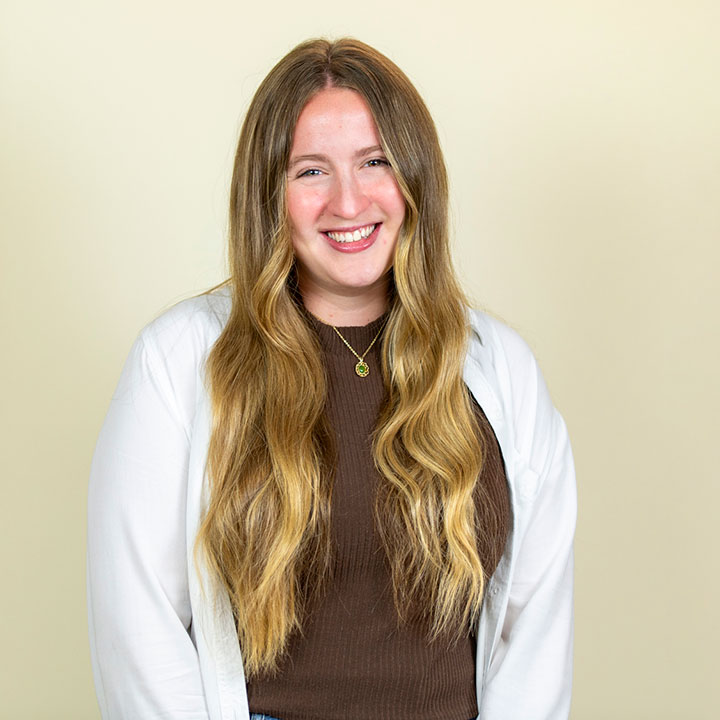
Jamie Gensbauer, MS profile and information
Learn more about Jamie Gensbauer, MS
- Doctoral Researcher
- Instructor of Record
More bio information
Short Bio
Hello! I am so happy you're here :) Academically: I am an advanced PhD student with research interests in early literacy, language, and relational health. Specifically, I love exploring shared reading interactions between babies and their caregivers. Additionally, I have a strong love for teaching! Personally: I am originally from the Philadelphia area (go birds). I love crafts, escape rooms, anything murder mystery themed, reading, and sports. I have a soft spot for babies, dogs, and trinkets.
Education
Doctor of PhilosophyAuburn University
Master of ScienceWest Chester University2023
Bachelor of ArtsThe Pennsylvania State University2020
Professional Experience
Instructor of Record Summer 2025-Present
Auburn University
Graduate Research Assistant August 2023-Present
Auburn University: Dr. Cynthia Frosch’s EARLY Lab
Graduate Student Organization President January 2025-December 2026
Auburn University
Graduate Teaching Assistant August 2023-Spring 2025
Auburn University: Dr. Stephanie Baumann
Graduate Research Assistant May 2024-August 2024
Auburn University: Dr. Nannette Phillips
Graduate Research Assistant October 2021-May 2023
West Chester University: Dr. Eleanor Brown’s Early Childhood Cognition and Emotions Lab
Undergraduate Research Assistant November 2019-December 2020
The Pennsylvania State University: Dr. Newman’s Anxiety and Depression Lab
Undergraduate Teaching Assistant August 2020-December 2020
The Pennsylvania State University, University Park, PA
Undergraduate TA, Human Development and Family Studies 411 - The Helping Relationship
Innovation
In The EARLY Lab, I have assisted with a multi-wave research project, Books and Babies, which explores shared book interactions between caregivers and their infants. In this project, we partnered with Reach Out and Read pediatric clinics across the state of Alabama, providing developmentally appropriate board books to families of infants during well-child visits during the first year of life. This project allowed me to visit pediatric clinics and establish connections with ROR clinics and pediatric care providers. I also had the opportunity to attend the Reach Out and Read/Nurture Connection Summit in Washington, D.C. in October 2025, where I deepened my understanding of Reach Out and Read and the American Academy of Pediatrics and met with leading scholars in the early literacy and early relational health fields. This connection led to my collaboration with the COMBO national team at Columbia University, where I worked as a gold standard coder on 4-month mother-infant interaction videos from July 2025 to July 2026. Using an adapted version of the NICHD scales, originally developed by Margaret Owen and Martha Cox, I was trained to reliability with the project's gold standard coder, Dr. Cynthia Frosch, and served as one of three gold standard coders on the project, leading a team of eleven. Through this role, I gained experience leading team members, training undergraduate students, organizing data, ensuring reliability, and maintaining confidentiality protocols for video data.
My current independent research project involves exploring protective practices for families to mitigate the risk of experiencing parental burnout. More to come as I complete my Qualifying Exam!
Engagement
Working with the Women’s Philanthropy Board to distribute developmentally appropriate board books to infants across the state of Alabama. Additionally, I have created lay materials and final research reports that were shared with outside organizations.
Working with Family Child Care Partnerships, I created a resource directory that highlighted agencies in every county of Alabama for family child care providers and the families they serve. This resource directory included organizations related to healthcare, transportation, education, nutrition, and more.
Leadership Experience
I served as the president of our Graduate Student Organization for two years. Within those terms, I researched stipends at other universities, created a thematic analysis of our graduate students’ voices regarding funding, and advocated for a raise to our faculty and department heads. As a result, we received an increase in the stipend we receive for our assistantship work.

